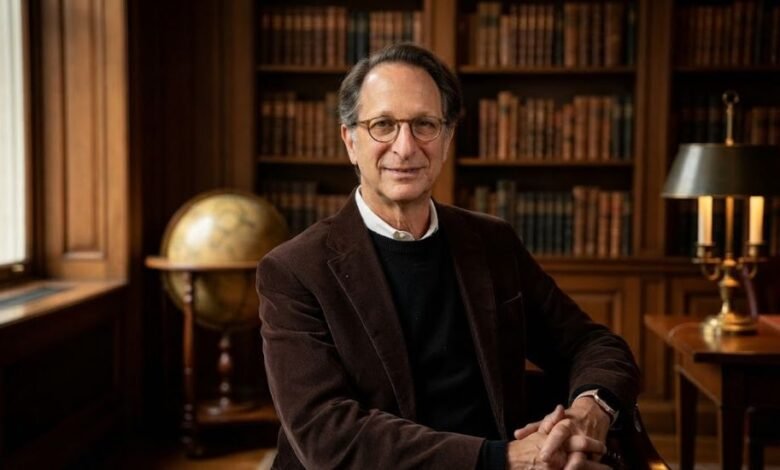
Andrew Weissmann is an American attorney, former federal prosecutor, professor, author, and legal analyst whose career has spanned some of the most significant investigations in modern U.S. law enforcement. From his work on the Enron Task Force to his role in Robert Mueller’s Special Counsel’s Office, Weissmann has built a reputation through decades of public service and legal practice. His later work in academia, publishing, television, and podcasting has expanded his professional reach even further.
Because of this unusually broad career, questions about Andrew Weissmann net worth often arise. However, there is no authoritative public financial statement confirming his exact wealth. Recent online estimates generally place his wealth in the multi-million-dollar range, but those figures should be treated as estimates rather than verified financial facts.
Quick Bio of Andrew Weissmann
| Category | Details |
|---|---|
| Full Name | Andrew A. Weissmann |
| Born | March 17, 1958 |
| Profession | Attorney, professor, author, legal analyst |
| Education | Princeton University, University of Geneva, Columbia Law School |
| Current Role | Professor of Practice at NYU School of Law |
| Known For | Enron Task Force, FBI, DOJ, Mueller investigation |
| Former FBI Role | General Counsel |
| Former DOJ Role | Chief of the Fraud Section |
| Major Law Firm | Jenner & Block |
| Notable Book | Where Law Ends |
| Estimated Net Worth | Unofficial estimates place it in the multi-million-dollar range |
| Exact Wealth | Not publicly verified |

What Is Andrew Weissmann’s Net Worth?
There is no confirmed public figure for Andrew Weissmann’s personal net worth. Several online publications have published estimates, with some recent reports placing his wealth around $5 million to $10 million, while other estimates extend toward approximately $12 million. These figures are not supported by a publicly available financial statement, audited balance sheet, or comprehensive disclosure of his assets and liabilities.
For that reason, it is more accurate to describe Weissmann’s wealth as being estimated in the multi-million-dollar range rather than stating one precise number as fact.
His career does provide a reasonable explanation for why estimates reach that level. He spent decades in federal law enforcement, worked as a partner at a major law firm, held senior positions within the Department of Justice and FBI, and later developed additional income opportunities through teaching, books, media appearances, and podcasting.
Early Career and Legal Education
Andrew Weissmann was born in 1958 and developed his legal career through a combination of academic training and federal service.
He earned a bachelor’s degree from Princeton University and later attended the University of Geneva as a Fulbright Fellow. He then earned his Juris Doctor from Columbia Law School, where he was involved with the Columbia Law Review. The U.S. Department of Justice also notes that he clerked for federal judge Eugene H. Nickerson before beginning his prosecutorial career.
Weissmann joined the U.S. Attorney’s Office for the Eastern District of New York in 1991. During approximately 15 years as a federal prosecutor, he handled organized-crime and criminal cases and eventually became chief of the Criminal Division.
That early government work established the foundation for the positions that followed.
The Enron Task Force
One of the defining chapters of Weissmann’s career came with the Justice Department’s investigation into Enron.
From 2002 to 2005, he served as deputy director and later director of the Enron Task Force. The Department of Justice says the task force supervised investigations and prosecutions involving more than 30 individuals connected to Enron’s collapse. Those cases included high-profile executives such as Jeffrey Skilling, Kenneth Lay, and Andrew Fastow.
The position itself was government work, meaning it should not be viewed as a sudden source of enormous personal wealth. Its longer-term importance was professional.
Leading such a significant white-collar investigation strengthened Weissmann’s reputation in corporate fraud and complex criminal litigation. That experience later helped him move between government and private practice.
Private Practice at Jenner & Block
Private legal practice is an important part of understanding Weissmann’s potential wealth.
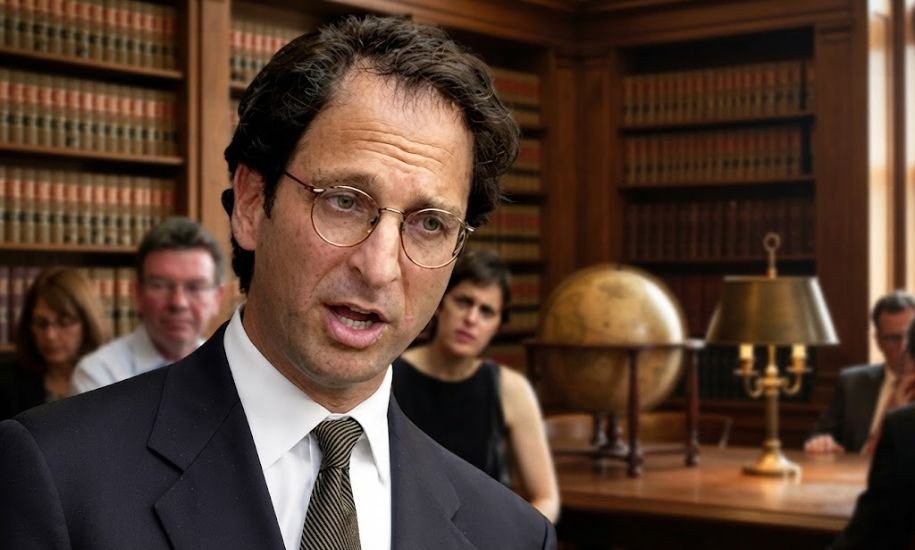
After serving as special counsel to FBI Director Robert Mueller, Weissmann became a partner at Jenner & Block in New York. According to the Department of Justice, he was a member of the firm’s Management Committee and co-chair of its White Collar Practice Group. His work included matters involving securities fraud, antitrust, healthcare fraud, and the Foreign Corrupt Practices Act.
Senior partners at major law firms can earn substantially more than government attorneys, although individual compensation varies widely.
Weissmann’s exact compensation from private practice has not been publicly established. Therefore, it is impossible to calculate how much this period contributed to his current wealth.
Still, his private-sector career represents a potentially important part of the financial story because it provided a different earning environment from his years in federal service.
Andrew Weissmann and the FBI
From 2011 to 2013, Weissmann served as General Counsel of the Federal Bureau of Investigation under then-director Robert Mueller. NYU confirms this position as part of his long record in federal law enforcement.
The FBI position placed him in a senior legal role within one of the country’s most prominent federal agencies.
His connection with Mueller would later become especially significant when Mueller was appointed special counsel in 2017.
Department of Justice Career
Weissmann returned to the Department of Justice in 2015 as Chief of the Criminal Division’s Fraud Section.
The DOJ described his career at the time as including more than two decades of federal prosecution, his work with the FBI, his leadership of the Enron Task Force, and his private practice at Jenner & Block.
This position further established him as a specialist in sophisticated fraud and white-collar criminal matters.
Although senior government positions carry substantial responsibility, government salaries alone do not explain the higher wealth estimates associated with Weissmann. His private-sector work and later professional activities are important parts of the overall picture.
Role in the Mueller Investigation
Weissmann became nationally recognizable when he joined Robert Mueller’s Special Counsel’s Office in 2017.
NYU records that he served as a lead prosecutor on Mueller’s team from 2017 to 2019.
The investigation brought considerably more public attention to his work. After leaving the Special Counsel’s Office, Weissmann continued to discuss legal and investigative issues through writing, teaching, television, and books.
His public profile became an asset that extended beyond traditional courtroom practice.
Books and Publishing Income
Publishing has become another important part of Weissmann’s post-government career.
His 2020 memoir, Where Law Ends: Inside the Mueller Investigation, described his experience working on the Special Counsel’s investigation. NYU identifies the book as a New York Times bestseller.
He also co-authored The Trump Indictments: The Historic Charging Documents With Commentary with law professor Melissa Murray. NYU states that both books became New York Times bestsellers.
Book royalties, advances, audiobook rights, and related publishing arrangements can provide additional income for established authors. However, Weissmann’s individual publishing earnings have not been publicly disclosed.
His latest book, Liar’s Kingdom, was published in May 2026, according to his current NYU biography.
Professor at NYU School of Law
Weissmann is currently a Professor of Practice at New York University School of Law.
His teaching includes criminal law, criminal procedure, national security law, and business crimes. He has also previously taught at Fordham Law School and Brooklyn Law School.
His academic position provides another professional income stream, although his exact compensation is not publicly established.
The role also reflects the evolution of his career. Rather than leaving public service behind entirely, he has brought his experience in federal prosecution and investigations into legal education.
Television, Podcasting, and Legal Analysis
Another source of professional income is Weissmann’s work as a legal commentator.
He has appeared frequently as a legal analyst and has been involved in podcasts discussing major legal and political developments. NYU and other institutional biographies describe him as a frequent legal analyst and podcast co-host.
These activities can create income through media contracts, podcast arrangements, speaking opportunities, publishing, and related professional work.
However, exact compensation for television appearances or podcasting is generally private. Online salary estimates should therefore not automatically be treated as Weissmann’s actual earnings.
Andrew Weissmann Wife and Family
Weissmann has generally kept his personal life much more private than his professional career.
Some online biography sources identify a woman named Debra or Deborah Weissmann as his wife, but reliable institutional biographies such as NYU’s official profile do not provide detailed information about his marriage or children.
Because publicly verified information about his family is limited, claims about his spouse, children, family finances, or private lifestyle should be treated cautiously.
His professional biographies focus overwhelmingly on his legal career, education, books, teaching, and public work.
How Andrew Weissmann Built His Wealth
Rather than coming from one business or investment, Weissmann’s financial position appears to be the result of a long professional career.
The main areas associated with his career include:
- Federal prosecution
- Senior Department of Justice positions
- FBI leadership
- Private legal practice
- University teaching
- Book publishing
- Television legal analysis
- Podcasting and writing
His years in government helped establish his expertise and reputation, while private practice likely offered greater earning potential. His later work has diversified his professional income.
Still, without access to a complete financial disclosure, it is impossible to determine exactly how much each category contributed to his current wealth.
Why Net Worth Estimates Vary
Online estimates differ because net worth is not the same as career income.
A person’s net worth is generally calculated by subtracting liabilities from assets. That requires information about investments, real estate, savings, retirement accounts, business interests, debts, and other financial holdings.
Most of those details are not publicly available for Weissmann.
As a result, websites may estimate his wealth by combining assumptions about law-firm compensation, academic earnings, media income, book royalties, and career longevity. Different assumptions naturally produce different totals.
This explains why figures such as $5 million, $8 million, $10 million, or $12 million may appear online without any of them being independently verified.
What Is Known With Confidence?
Although his finances remain private, Weissmann’s professional history is extensively documented.
NYU confirms his work as a federal prosecutor, Enron Task Force leader, FBI General Counsel, DOJ Fraud Section chief, Mueller prosecutor, professor, author, and legal analyst.
The Department of Justice also documents his work in the Eastern District of New York, Enron Task Force, FBI, private practice, and Fraud Section.
That documented career provides the strongest basis for understanding his financial trajectory.
Frequently Asked Questions
What is Andrew Weissmann’s net worth?
His exact net worth has not been publicly verified. Recent unofficial estimates generally place his wealth in the multi-million-dollar range, with some sources suggesting approximately $5 million to $12 million.
How did Andrew Weissmann become wealthy?
His career has included federal prosecution, senior DOJ and FBI positions, private legal practice, teaching, publishing, television analysis, and podcasting. Private legal practice and his later professional activities are potential contributors to his wealth.
Is Andrew Weissmann still working?
Yes. NYU School of Law currently lists him as a Professor of Practice. He also continues writing, publishing, and participating in legal commentary.
What was Andrew Weissmann’s role in the Mueller investigation?
He served as a lead prosecutor in Robert Mueller’s Special Counsel’s Office from 2017 to 2019.
Did Andrew Weissmann work on the Enron case?
Yes. He served as deputy director and later director of the Justice Department’s Enron Task Force from 2002 to 2005 and supervised investigations and prosecutions involving more than 30 individuals.
Final Thoughts
Andrew Weissmann’s career is considerably easier to document than his personal finances. His work as a federal prosecutor, Enron Task Force leader, FBI General Counsel, DOJ Fraud Section chief, Mueller prosecutor, law professor, author, and media analyst is well established by institutional sources.
His exact wealth, however, remains private. Current online estimates generally put Andrew Weissmann net worth somewhere in the multi-million-dollar range, with approximately $5 million to $12 million appearing in recent estimates. Those figures should not be treated as confirmed financial facts because no authoritative source has published a complete accounting of his assets and liabilities.
For infovio, the most useful takeaway is that Weissmann’s financial story is closely connected to a decades-long legal career rather than a single business venture. His movement from government prosecution to private practice, academia, publishing, and media has created multiple professional income streams while keeping his personal financial details largely outside the public record.