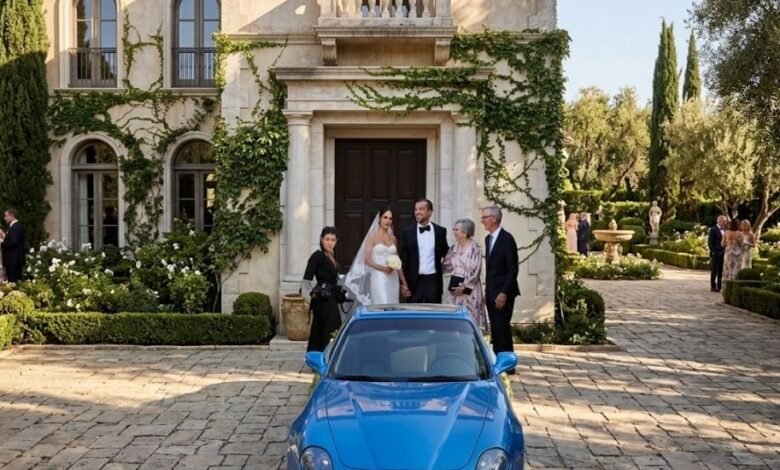
Mason Morfit is a prominent American investor and business executive whose career has been closely associated with ValueAct Capital, one of the better-known investment firms specializing in active ownership and corporate governance. While his professional reputation comes from decades in finance and boardroom strategy, public interest in his life expanded after his marriage to actress Jordana Brewster, known for her role in the Fast & Furious franchise. Today, Morfit combines a high-profile investment career with responsibilities as a husband, father, board member, and musician.
Quick Bio
| Detail | Information |
|---|---|
| Full Name | G. Mason Morfit |
| Profession | Investor, Business Executive |
| Known For | ValueAct Capital |
| Current Role | Co-CEO and Chief Investment Officer, ValueAct Capital |
| Education | Princeton University |
| Degree | B.A. in Political Economy |
| Spouse | Jordana Brewster |
| Children | Four children from a previous relationship |
| Public Board Role | Salesforce director |
| Music | Guitarist with Birdseed |
| Nationality | American |
Mason Morfit Early Life and Education
Mason Morfit’s early life was shaped by an international upbringing. Because of his father’s work as a U.S. diplomat, he spent part of his childhood living abroad, including time in India and Indonesia. He later returned to the United States and attended Sidwell Friends School in Washington, D.C.
His academic path eventually took him to Princeton University, where he earned a bachelor’s degree in Political Economy. His education provided a useful foundation for a career that would combine economics, corporate strategy, investment analysis, and governance.
Rather than becoming known through entertainment or social media, Morfit built his reputation gradually through the investment industry. His professional background reflects a long-term interest in understanding businesses, management teams, and the decisions that can influence corporate performance.
Mason Morfit Career and Rise at ValueAct Capital
A major part of Morfit’s professional identity is connected to ValueAct Capital. Before joining the investment firm, he worked in equity research at Credit Suisse First Boston, where he focused on the managed-care industry.
He joined ValueAct in 2001 and gradually assumed greater responsibilities. Over the years, he became deeply involved in the firm’s approach to active investing, which emphasizes working with company management and boards rather than simply taking a passive ownership position.
Morfit became Chief Investment Officer in 2017 and was appointed CEO in 2020 after founder Jeff Ubben stepped away from the chief executive position. In 2023, he became Co-CEO while continuing as Chief Investment Officer. Current Salesforce materials identify him as Co-CEO and CIO of ValueAct Capital, which has more than $10 billion in assets under management.
His career demonstrates how investment professionals can influence companies through strategic engagement, boardroom participation, and long-term analysis.
His Work in Corporate Governance
One of the defining features of Morfit’s career is his involvement in corporate governance. He has developed extensive experience working with boards and executives on subjects such as business strategy, operational discipline, executive compensation, and long-term value creation.
His expertise has also led to teaching and speaking opportunities. He has lectured on corporate governance and executive compensation at Stanford Law School’s Directors’ College, Stanford Graduate School of Business, and the Haas School of Business at the University of California, Berkeley.
This educational role is notable because it reflects an aspect of his career beyond investing. Morfit has become a source of practical insight into how boards and senior executives can approach complex business decisions.
Mason Morfit and Salesforce
Another important chapter in his career began in 2023, when Salesforce appointed him to its board of directors. His appointment was announced alongside Arnold Donald and Sachin Mehra as part of the company’s board refreshment process.
Salesforce’s current board information lists Morfit as a director and notes his role as Co-CEO and Chief Investment Officer of ValueAct Capital. He serves on the company’s Compensation Committee, where his experience with executive compensation and corporate governance is particularly relevant.
His previous board experience also includes companies such as Microsoft, Valeant Pharmaceuticals, Advanced Medical Optics, C.R. Bard, Immucor, MSD Performance, and Solexa.
Mason Morfit Wife: Jordana Brewster
Outside the financial world, Morfit is widely recognized as the husband of actress Jordana Brewster. The couple married in September 2022 after becoming romantically involved following Brewster’s separation from her first husband, producer Andrew Form.
Brewster is internationally known for portraying Mia Toretto in the Fast & Furious film series. Her marriage to Morfit brought together two very different professional worlds: Hollywood entertainment and institutional investing.
Their relationship has attracted media attention, but both have generally maintained a relatively private approach to their personal lives. Public comments from Brewster have emphasized the importance of partnership, support, and family in their relationship.
Mason Morfit Children and Family Life
Family is another important part of Morfit’s personal story. He has four children from a previous relationship, while Brewster has two sons, Julian and Rowan, from her marriage to Andrew Form. Their marriage therefore created a blended family of six children.
The couple’s family arrangement involves navigating parenting responsibilities across previous relationships. Brewster has spoken publicly about the positive aspects of their blended family and the support she experiences within it.
Although specific details about Morfit’s children are generally kept private, the available public information shows that fatherhood is an important part of his life away from the corporate world.
Mason Morfit Age and Personal Interests
Current Salesforce materials list Morfit at age 50 in 2026.
Beyond finance, he has an unexpected creative interest: music. Morfit plays guitar in the San Francisco-based rock band Birdseed. The group released the EP Not Out of Time in 2017, with credits identifying Morfit as one of its guitarists.
His involvement with music offers a different perspective on his personality. While his professional life involves investment decisions, corporate governance, and board meetings, playing in a band provides a creative outlet outside the financial sector.
Mason Morfit Net Worth and Financial Success
Because Morfit is a private individual rather than a publicly traded-company chief executive whose complete compensation package is routinely disclosed, a precise figure for his personal net worth is difficult to establish from reliable public sources.
His senior position at ValueAct Capital, decades of investment experience, board appointments, and leadership responsibilities indicate a highly successful career. However, estimates published online should be treated cautiously unless they are supported by financial records or credible disclosures.

Rather than relying on speculative net-worth figures, his professional achievements provide a clearer picture of his financial standing and influence. His career at ValueAct and involvement with major public companies have placed him among the more recognizable figures in activist and governance-focused investing.
Frequently Asked Questions About Mason Morfit
1. Who is Mason Morfit?
Mason Morfit is an American investor and business executive. He is Co-CEO and Chief Investment Officer of ValueAct Capital and also serves on the Salesforce board.
2. Who is Mason Morfit’s wife?
His wife is actress Jordana Brewster, best known for playing Mia Toretto in the Fast & Furious franchise. The couple married in September 2022.
3. How many children does Mason Morfit have?
Morfit has four children from a previous relationship. Together with Brewster’s two sons, their blended family includes six children.
4. Where did Mason Morfit go to college?
He attended Princeton University, where he earned a B.A. in Political Economy.
5. Is Mason Morfit involved in music?
Yes. He plays guitar with the San Francisco rock band Birdseed, which released the Not Out of Time EP in 2017.
Final Thoughts
Mason Morfit’s story extends well beyond his connection to a famous actress. His career at ValueAct Capital reflects years of investment analysis, corporate governance work, and engagement with major companies, while his Salesforce board position further demonstrates his influence in the technology and corporate leadership landscape. At the same time, his marriage to Jordana Brewster, role as a father, and passion for music reveal a more personal side of a businessman whose professional life is usually centered on boardrooms and investment strategy. For readers looking for a balanced look at his background and achievements, Infovio offers a useful perspective on the career and personal journey behind the public name.