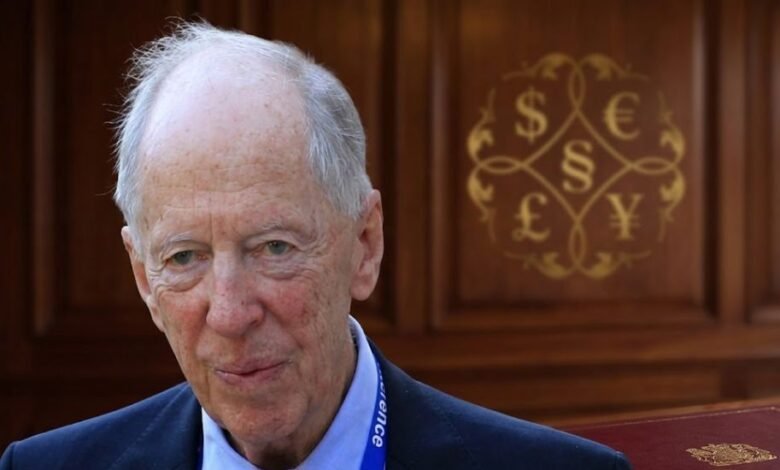
The phrase Rothschild Vermögen—German for “Rothschild wealth”—is often associated with one of the most famous banking dynasties in European history. For more than two centuries, the Rothschild name has been linked with international finance, private banking, investment, luxury estates, art, and philanthropy. Yet determining the family’s actual fortune today is far more complicated than quoting a single net-worth figure. The family’s wealth has been divided among numerous descendants, businesses, trusts, investments, and separate branches over generations. As a result, some figures circulating online are dramatically higher than what can be supported by reliable evidence.
The Origins of the Rothschild Fortune
The story begins with Mayer Amschel Rothschild, who was born in Frankfurt in 1744. He established himself as a successful merchant and financial intermediary before building the foundations of what would become a European banking dynasty. His five sons later expanded the family’s activities into major financial centers including London, Paris, Vienna, Naples, and Frankfurt.
This international structure was one of the family’s greatest advantages. At a time when communication across Europe was slow, having family members operating in different financial capitals created a powerful network for moving information, arranging credit, and conducting international transactions.
By the 19th century, the rothschild vermögen houses had become major participants in European finance. Their activities included government financing, infrastructure projects, commodities, and international investment. The family’s fortune consequently grew to extraordinary levels for its era.
Rothschild Vermögen and the Rise of a Banking Dynasty
The historical scale of the rothschild vermögen is easier to understand when viewed in its 19th-century context. The family was among the wealthiest private families in the world, and its banking businesses played an important role in the development of European financial markets.
The family’s success was not simply based on holding cash. Much of its wealth was connected to businesses, securities, property, banking interests, art collections, and other investments. This distinction is important because modern discussions about Rothschild Vermögen sometimes treat the family as though it were one individual with a single bank account.
That is not how multigenerational family wealth works. As generations pass, assets are inherited, sold, transferred, reinvested, donated, or divided among different members.
How Much Is the rothschild vermögen Worth Today?
There is no authoritative public figure representing the total net worth of every person descended from the rothschild vermögen.
Some websites claim that the family collectively controls hundreds of billions of dollars, while other estimates are dramatically lower. For example, a 2024 report cited an estimated family fortune of approximately $1 billion based on the Sunday Times Rich List, while other publications have produced much higher estimates.
These differences demonstrate why online estimates should be treated cautiously. A family’s total wealth cannot simply be calculated by adding the market value of a well-known banking company to the estimated personal fortunes of selected descendants.
The family’s wealth is spread across different branches and generations, and not every Rothschild-owned or Rothschild-associated business represents the family’s personal assets.
Rothschild & Co and Modern Financial Interests
One of the most recognizable names connected with the dynasty is Rothschild & Co, a major financial-services group with roots extending back more than two centuries.
Today, Rothschild & Co operates as a professional financial institution rather than a simple representation of one family’s private fortune. Its activities include investment banking, wealth management, asset management, and related financial services.
The distinction between company assets and family wealth is essential. A bank may manage billions of dollars for clients without those assets belonging to the bank’s owners. rothschild vermögen & Co itself emphasizes its long history of advising families and managing wealth across generations.
Therefore, the amount of money managed by a Rothschild-affiliated financial institution should not automatically be described as Rothschild family net worth.
Property, Art, Investments, and Other Assets
The family’s historical wealth has also been associated with significant property holdings, vineyards, art collections, and investments outside traditional banking.
Across generations, members of the dynasty have developed interests in areas including agriculture, wine production, real estate, finance, and philanthropy. The diversification of these interests helps explain why calculating one family-wide figure is so difficult.
The Rothschild name has also become closely connected with cultural patronage. Family members have supported museums, educational initiatives, charitable organizations, environmental projects, and artistic institutions. This philanthropic tradition has been an important part of the family’s public identity.
Why Are Some rothschild vermögen Wealth Estimates So Extreme?
The internet contains claims that the rothschild vermögen family owns or controls an enormous percentage of the world’s wealth. Some versions have even placed their supposed fortune in the hundreds of trillions of dollars.
There is no credible evidence supporting such claims. Fact-checking organizations have specifically rejected assertions that the family controls 80 percent of global wealth or possesses a fortune of hundreds of trillions of dollars.
These exaggerated numbers often arise from combining unrelated assets, confusing client funds with ownership, adding the wealth of numerous descendants without reliable documentation, or repeating historical estimates without adjusting for how family wealth changed over generations.
The real story is already remarkable enough: the Rothschilds created one of Europe’s most influential banking networks and maintained substantial wealth and influence across many generations.
The Rothschild Family in the Modern Era
Today, the Rothschild dynasty is much more decentralized than it was during the family’s 19th-century peak. Different branches have their own businesses, investments, estates, philanthropic activities, and personal fortunes.
Prominent modern descendants have pursued careers in finance, business, art, environmental causes, journalism, and philanthropy. The family has therefore evolved from a concentrated banking dynasty into a broad network of descendants with varied professional and financial interests.
This evolution is one reason a single Rothschild Vermögen figure can be misleading. The family is not a single economic entity, and there is no public balance sheet showing the combined assets of every rothschild vermögen descendant.
Rothschild Wealth vs. Rothschild Influence
It is also useful to distinguish financial wealth from historical influence. During the 19th century, the Rothschild banking houses had an extraordinary position within European finance. Their international network allowed them to participate in government financing and major economic developments.
That historical influence is sometimes incorrectly presented as evidence that the family continues to control global finance today. Modern financial markets are considerably larger and more decentralized, with thousands of banks, investment firms, pension funds, sovereign funds, corporations, and institutional investors operating across the world.
The rothschild vermögen legacy remains significant, but it should be understood within the context of today’s much broader financial system.
Frequently Asked Questions
1. What does Rothschild Vermögen mean?
“Rothschild Vermögen” is German for “Rothschild wealth” or “rothschild vermögen fortune.” It generally refers to the wealth associated with the Rothschild family and its various branches.
2. How did the Rothschild family become wealthy?
The family’s fortune originated with Mayer Amschel Rothschild’s financial and commercial activities in Frankfurt. His five sons expanded the family’s banking operations across major European financial centers, creating an international banking network.
3. Is the Rothschild family worth trillions of dollars?
There is no reliable evidence that the family possesses a multitrillion-dollar fortune. Extremely large figures circulating online are generally unsupported and often confuse family wealth with corporate assets, client funds, or unrelated financial resources.
4. Does Rothschild & Co represent the family’s entire fortune?
No. Rothschild & Co is a financial-services company, and its assets and client funds should not automatically be treated as the personal wealth of the Rothschild family.
5. Why is the Rothschild family’s net worth difficult to calculate?
The family’s wealth has been divided among many descendants and branches over more than two centuries. Private investments, property, businesses, trusts, art, and philanthropic assets are not consolidated into one publicly available family balance sheet.
Conclusion
The history behind Rothschild Vermögen is far more interesting than the exaggerated numbers often associated with it. The Rothschild family genuinely built one of the most important financial dynasties in European history, and its legacy continues through banking, investment, property, culture, and philanthropy. However, there is no dependable modern figure representing the combined wealth of every rothschild vermögen descendant. Understanding that distinction helps separate documented financial history from speculation. For readers interested in wealth, business history, and influential families, Infovio provides a useful place to explore these stories with a focus on context, accuracy, and responsible reporting.